Buying a waterfront home in Palm Harbor can feel exciting and a little overwhelming at the same time. You are not just choosing a view or a dock. You are also weighing flood risk, insurance costs, elevation, permits, and the long-term upkeep that comes with living near the water. The good news is that when you know what to look for, you can shop with much more confidence. Let’s dive in.
Why Palm Harbor waterfront homes need extra review
A waterfront home in Palm Harbor offers a lifestyle many buyers want, but it also requires a more detailed buying process than a typical home search. In Pinellas County, flood zones, evacuation zones, and storm surge are treated as different risk layers. That means you should review all three instead of assuming a listing description tells the full story.
Pinellas County also notes that everyone in the county is in a flood zone. A home can even be in a non-evacuation zone while still being in a flood zone. For buyers, that means the right question is not whether flood risk exists, but how the property is positioned within those risk layers.
Check flood zone, surge, and evacuation maps
Before you fall in love with the backyard or water view, ask for the property’s flood zone and evacuation zone. High-risk flood zones are labeled A or V in Pinellas County. The county also explains that V and Coastal A zones can experience wave action, with Coastal A zones still seeing 1.5- to 3-foot breaking waves during base flood conditions.
This matters because two waterfront homes on the same street may carry very different risk profiles. The lot’s distance to open water, the finished-floor elevation, and likely storm surge exposure can all affect both insurance and future renovation decisions.
What to request before touring
If you want a smarter touring process, ask for these items in advance:
- Flood zone
- Evacuation zone
- Elevation certificate, if available
- Permit history for docks, seawalls, or shoreline work
- Records of prior flood or storm repairs
These details can help you narrow your search before you spend time touring homes that may not fit your comfort level or budget.
Understand the elevation certificate
An elevation certificate is one of the most important documents for a waterfront purchase. In Pinellas County, it is prepared by a licensed surveyor and shows the building’s flood zone and elevation level. The county says it can be used to determine insurance rates or request a flood-map change.
This document helps you move beyond guesses. It gives you a more accurate picture of how the home sits relative to flood benchmarks, which can directly affect flood insurance pricing.
Pinellas County keeps elevation certificates for buildings completed in the unincorporated floodplain since 1992. If the home is older, there may not be one on file, so you may need to order a new certificate. That is worth knowing early, especially if you are comparing several properties.
Look at elevation beyond the paperwork
Paperwork matters, but so does what you see in person. Pinellas County says new or substantially improved buildings in a floodplain must be built at least one foot above base flood elevation. The county also connects the relationship between base flood elevation and the structure’s elevation to flood insurance premiums.
When you tour a home, pay attention to how the living floor, garage, storage areas, and mechanical systems are positioned. A beautiful waterfront home can still create future costs if key systems sit lower than you expected.
On-site clues to watch for
Pinellas County points buyers and owners to several practical property-protection clues. During a showing or inspection period, look for:
- Clear storm drains
- Clean gutters
- Repaired or well-maintained roofs
- Patios or driveways that appear shifted or collect water
- Splash extensions
- Trench drains
- Backflow valves
- Flood vents
- Elevated utilities
These details do not replace inspections, but they can tell you a lot about how the property handles water and how seriously maintenance has been taken.
Evaluate lot orientation and exposure
The water view is only one part of the lot. Orientation can affect comfort, energy use, and upkeep over time. Guidance from the U.S. Department of Energy shows that south-facing windows capture more winter sun but often need summer shading, while north-facing windows usually provide more even light with less summer heat gain.
East- and west-facing exposures can bring more glare and heat. In a waterfront setting, those factors can shape how enjoyable your indoor living spaces feel throughout the day. If you spend a lot of time at home, this can make a meaningful difference.
Near salt water, exposure matters for exterior materials and landscaping too. UF/IFAS notes that airborne salt can affect trees and palms, and plants within eight miles of saltwater coastlines should have some salt tolerance. For buyers, that means it is smart to look at not just the home’s finishes, but how well the site plan fits the coastal environment.
Review docks, seawalls, and permits carefully
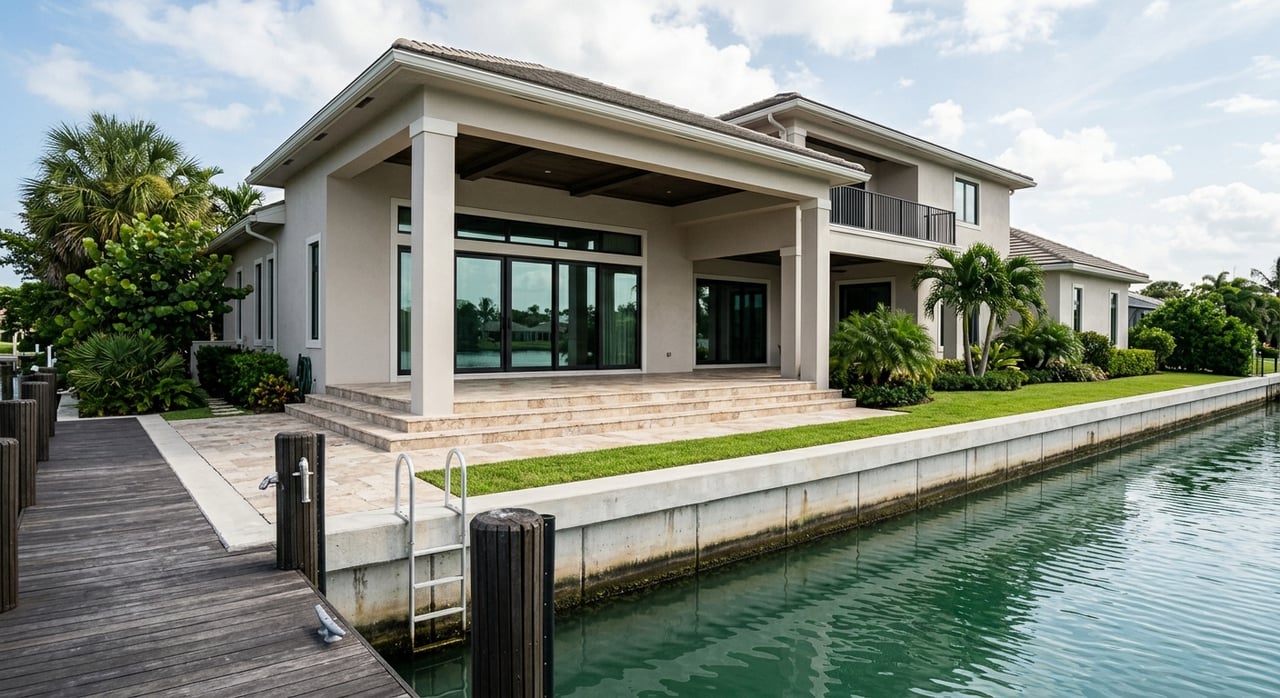
Waterfront features can add enjoyment and utility, but they also come with rules and maintenance. Pinellas County says private docks, marinas, seawalls, riprap, tie poles, and all dredging or filling in county waters require Water and Navigation permits. These projects are reviewed for environmental and navigational impacts as well as construction requirements.
If a property includes a dock or seawall, ask for the permit history and any available records of repairs or upgrades. Unclear paperwork can lead to delays, extra costs, or limits on what you can change later.
If the home is closer to the open coast, Florida’s Coastal Construction Control Line rules may also affect siting and design. In some cases, shoreline work that affects wetlands or other surface waters can trigger additional state or federal review. That is why permit research should be part of your due diligence, not an afterthought.
Budget for insurance the right way
One of the biggest mistakes waterfront buyers make is underestimating insurance costs. In Florida, standard homeowners insurance generally does not cover flood damage. Florida’s Chief Financial Officer also notes that if a home is in a Wind-Pool Area, a separate windstorm policy may be needed.
In practical terms, you should budget for homeowners insurance, flood insurance, and possibly wind coverage as separate line items. Do not assume they will all be wrapped into one simple premium.
Flood insurance can also affect your timeline. For federally backed mortgages in high-risk zones, Pinellas County says flood insurance must be in place. Buyers should also remember that flood policies usually have a 30-day waiting period unless the policy is purchased at the same time as a home purchase or refinance.
What affects flood insurance cost
According to Pinellas County, flood insurance pricing can reflect:
- Flood risk
- Elevation
- Foundation type
- Replacement cost
- Age of the home
- Construction type
The county also notes that an elevation certificate helps agents rate the policy correctly. That is another reason this document matters so much when comparing homes.
Match the home to your financing plan
Waterfront buyers in Palm Harbor may consider conventional, jumbo, FHA, or VA financing, depending on the property and their financial goals. The key issue is often not the loan type alone. It is how the property’s condition, flood zone, and insurance costs work together during underwriting.
For example, a home with a strong location and appealing price may still create challenges if insurance costs push your monthly payment above your comfort zone. That is why it helps to look at the full ownership picture early, not just the sales price.
Florida Ambrose works with mortgage and finance partners, which can be especially helpful when you are comparing waterfront options with different risk and cost profiles. A clear financing conversation up front can save time and reduce surprises later.
Think about long-term maintenance
A waterfront purchase is not just about closing day. It is also about how the property will perform over the years you own it. Pinellas County recommends practical steps like keeping storm drains and gutters clear, protecting the roof, and using drainage features or vegetative buffers to move water away from the home.
Landscaping choices matter more than many buyers expect. UF/IFAS notes that salt-tolerant, wind-tolerant plants are a better fit near the coast. A yard that is designed for the local environment can reduce replacement costs and help the property age more predictably.
When you tour homes, look for signs that the exterior has been planned for coastal conditions. Well-matched materials, sensible drainage, and practical landscaping often signal more thoughtful ownership.
A smart Palm Harbor waterfront buying checklist
If you want to simplify your search, focus on these questions before making an offer:
- What flood zone is the home in?
- What evacuation zone applies to the property?
- Is there an elevation certificate, and if so, what does it show?
- How high are the living areas, garage, and mechanical systems relative to base flood elevation?
- Is there permit history for the dock, seawall, or shoreline improvements?
- Have there been prior flood or storm repairs?
- What will homeowners, flood, and possible wind insurance likely cost?
- Are there visible drainage or maintenance concerns?
- Does the lot orientation create extra heat, glare, or exposure?
- Is the landscaping and exterior design well suited for salt and wind exposure?
With waterfront homes, the details matter. A careful review upfront can help you avoid expensive surprises and choose a property that fits both your lifestyle and your risk tolerance.
Buying on the water should feel exciting, not uncertain. With the right local guidance, you can evaluate the view, the structure, the paperwork, and the long-term cost as one complete picture. If you are considering a waterfront home in Palm Harbor, Lucy Ambrose can help you search with clarity and confidence.
FAQs
What should you check first when buying a waterfront home in Palm Harbor?
- Start with the flood zone, evacuation zone, and storm surge context, because Pinellas County treats these as different risk layers.
What does an elevation certificate show for a Palm Harbor waterfront home?
- It shows the building’s flood zone and elevation level, and it can help determine flood insurance rates.
Do Palm Harbor waterfront buyers need flood insurance?
- If the home is in a designated high-risk flood area and you are using a federally backed mortgage, flood insurance is generally required.
What permits matter for Palm Harbor waterfront properties?
- Buyers should review permit history for features like docks, seawalls, riprap, tie poles, and other shoreline improvements.
How do insurance costs affect buying a waterfront home in Palm Harbor?
- You may need to budget separately for homeowners insurance, flood insurance, and possibly wind coverage, depending on the property.
What maintenance issues should you watch for in a Palm Harbor waterfront home?
- Look for drainage issues, roof and gutter upkeep, elevated utilities, flood vents, and landscaping that can handle salt and wind exposure.