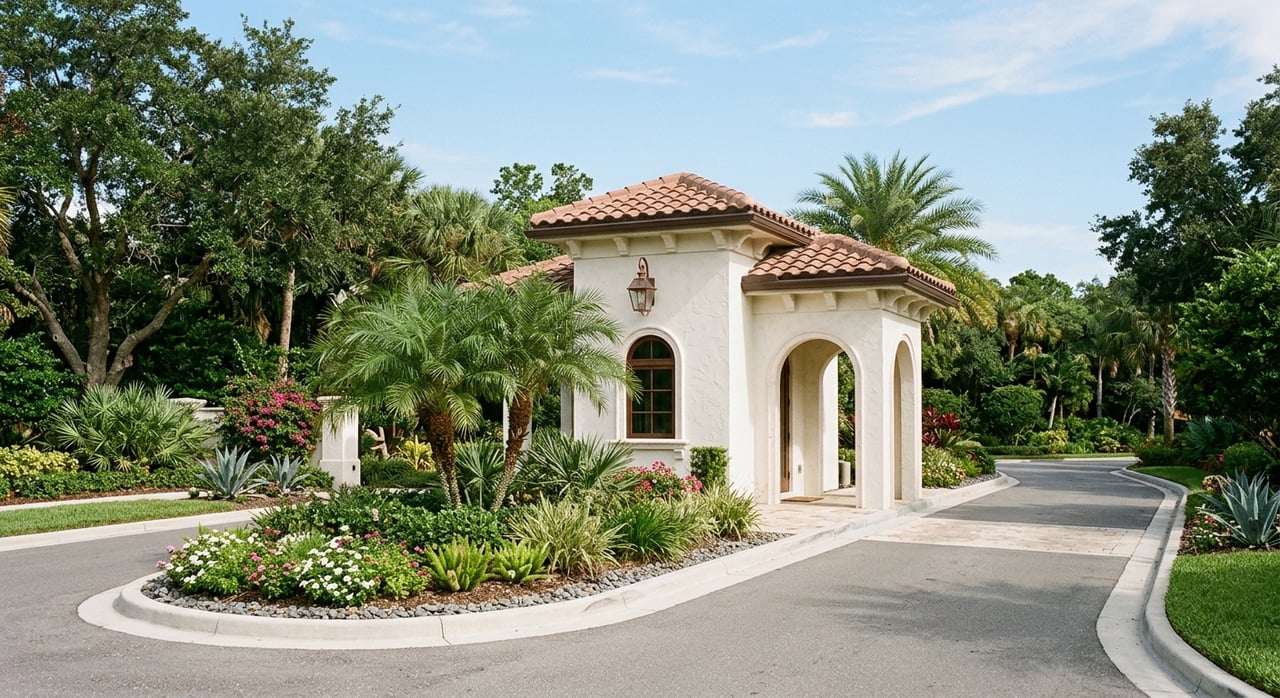
If you are shopping for a home in Lutz, a gate can look like the whole story. It is not. In this part of Hillsborough County, the real value often comes from the full package: access control, amenities, community rules, fees, and how all of that fits your lifestyle and long-term plans. This guide will help you understand what to look for in Lutz gated communities so you can buy with more confidence. Let’s dive in.
Why gated communities are common in Lutz
Lutz is an unincorporated community in northwest Hillsborough County with a largely suburban development pattern. County planning materials note that many developments are residential lots or subdivisions separated by lakes or recreational amenities such as parks and golf courses.
That local layout helps explain why gated, deed-restricted, and master-planned neighborhoods are common here. In many parts of Lutz, buyers are not just choosing a house. You are also choosing a community structure, shared amenities, and a set of rules that shape day-to-day living.
Gate vs deed restrictions
A gate and deed restrictions are not the same thing. A gate is an access-control feature, while deed restrictions are the recorded rules that govern how property can be used.
That distinction matters because two Lutz communities can feel very different even if both look polished from the street. Calusa Trace describes itself as a deed-restricted community, while Cheval is a gated community with HOA governance and a community development district, or CDD.
Some Lutz developments also include different types of property ownership within the same broader neighborhood. For example, a single-family home section may be governed under one framework while a condo enclave follows another. Before you make an offer, confirm exactly what type of association governs the property you are considering.
What HOA rules do and do not cover
Because Lutz is in unincorporated Hillsborough County, county ordinances and county code enforcement still apply alongside HOA rules. That means an HOA can regulate things like aesthetics or community-use standards, but it does not replace county-level enforcement or county-provided services.
For you as a buyer, this is important context. A well-run community may have clear internal rules, but your property is still part of a larger county system. Understanding both layers can help you avoid surprises after closing.
Amenities you may find in Lutz
Lutz communities can offer a wide range of amenities, but the mix varies a lot by neighborhood. Some focus on access control and appearance, while others deliver a fuller lifestyle package.
Common amenities in private communities may include:
- Controlled access or staffed gatehouses
- Visitor-management systems
- Community patrols
- Clubhouses
- Fitness centers
- Pools and aquatics
- Tennis or pickleball courts
- Golf access
- Dining and social programming
- Sidewalks and trails
- Ponds and lakes
- Playgrounds
- Neighborhood events
Cheval is one of the clearest local examples of a broad amenity offering. The community reports staffed access control at multiple gates, barcode access for residents, and patrol or security services, while The Club at Cheval offers golf, racquets, fitness, aquatics, dining, and social programming.
Calusa Trace reflects a different model. It is deed-restricted and not centered on a private golf-club lifestyle, but it features a community park, sidewalks, a bike path, and an HOA structure with regular communications and architectural review processes.
Look beyond the gate
When you tour homes in Lutz, it helps to think beyond the entrance and monument sign. Nearby public amenities can have a real impact on your everyday experience, even if they are not inside the neighborhood.
Hillsborough County’s Lake Park in Lutz includes a boat ramp, canoe rentals, a fitness trail, an archery range, horse arenas, picnic areas, and other outdoor uses. The county also highlights a growing greenways and trails network for walking and biking, and the Lutz Community Center offers classes, picnic tables, and open field space.
If you enjoy outdoor recreation, those nearby amenities can add meaningful value to a community that may have fewer private features on site. In other words, the best fit for you may be the neighborhood that gives you the right balance of private and public lifestyle options.
Documents to review before you buy
One of the smartest things you can do as a buyer is ask for the official records early. In Florida communities subject to Chapter 720, a prospective buyer must receive a disclosure summary before signing the contract.
That disclosure explains that you will become a member of the association, owe assessments and possibly special assessments, and may owe recreational or land-use fees. It also warns you to review the covenants and governing documents before purchase.
If that disclosure summary is not delivered before you sign, Florida law gives you a limited right to void the contract by written notice within 3 days after receiving the summary or before closing, whichever comes first. That is one reason early document review matters.
Key records to request include:
- Declaration of covenants, conditions, and restrictions
- Bylaws
- Rules and regulations
- Architectural review guidelines
- Current budget
- Recent financial reports
- Meeting minutes
- Any notice of pending special assessments
- Rental and leasing rules
- Parking and storage rules
Florida law requires associations to keep official records for at least 7 years and make them available within 10 business days after a written request, subject to the statutory access rules. Members may also inspect records electronically and use a portable device to copy them.
Pay close attention to architectural rules
Architectural review is often one of the biggest quality-of-life issues in deed-restricted and gated communities. If you plan to repaint, update landscaping, add exterior features, or make other visible changes, you will want to know the process upfront.
Florida law requires associations or architectural committees to explain denials with specificity. Many Lutz communities also maintain their own ARC guidelines. Calusa Trace, for example, requires approval for exterior paint colors and makes key governance materials available through its owner portal.
The takeaway is simple: if you expect to personalize the exterior of your home, read the ARC rules before you buy, not after.
Check parking, boat, and RV rules
In Lutz, parking and storage rules can be especially important if you own a boat, RV, trailer, or other visible exterior items. These rules vary from one community to the next, and they can shape whether a home really fits your lifestyle.
Florida law now limits what an HOA can restrict when items are not visible from the parcel frontage, an adjacent parcel, an adjacent common area, or a community golf course. The statute expressly mentions items such as boats, recreational vehicles, vegetable gardens, clotheslines, flags, and artificial turf.
Even so, you should still read the community’s actual rules carefully. The practical question is not just what the law allows in general, but how the specific community handles parking, storage, screening, and visibility.
Understand rental restrictions early
Rental rules matter for more than investors. If you are relocating, plan to travel often, or want future flexibility, rental restrictions can affect your options later.
Under Florida law, post-July 1, 2021 rental restrictions generally apply only to buyers who take title after the restriction becomes effective or who consent to it. Associations may still adopt rules that prohibit rentals shorter than 6 months and more than three rentals in a calendar year.
For an owner-occupant, that can limit flexibility if your plans change. For an investor, it can narrow the renter pool and influence cash-flow strategy or resale appeal.
Compare the full cost of ownership
When buyers compare communities, it is easy to focus on the HOA fee and stop there. In Lutz, that can be a mistake.
Your monthly or annual ownership costs may include:
- HOA assessments
- Special assessments
- Amenity fees
- Club dues
- CDD assessments
- Transfer fees
- Estoppel charges at closing
Florida law requires annual budgets to show recreational amenity fees separately from ordinary operating expenses. The financial reporting rules also require specific reserve and deferred maintenance disclosures, and if reserves are not fully funded, the reports warn that special assessments may be needed later.
Some communities add a CDD layer on top of the HOA. Under Chapter 190, a CDD is a local special-purpose government that can levy taxes or non-ad valorem assessments and issue bonds. Cheval West specifically states that it is governed by both a community association and a CDD.
That means you should compare the total carrying cost, not just one line item. HOA dues, CDD assessments, and private club membership costs may all be separate.
Closing fees to expect
Association-related fees can also show up at closing. The Florida Department of Business and Professional Regulation currently lists estoppel certificate fees at no more than $299, with a $119 expedited add-on and up to $179 more if the parcel is delinquent.
The same source lists transfer fees at $150 per applicant, with the next transfer-fee update scheduled for July 1, 2026. These amounts may be small compared with your purchase price, but they are still worth planning for early in the transaction.
How amenities can affect resale
Amenities can support value, but only if the community’s structure also makes sense to future buyers. In general, visible upkeep, understandable rules, and financially supported amenities tend to help a neighborhood stay appealing.
On the other hand, heavy restrictions, required club obligations, rental caps, or large recurring assessments can narrow the buyer pool when it is time to sell. That does not make those communities bad choices. It simply means the best community for you is the one whose costs and rules match your priorities now and likely resale audience later.
A smart buyer checklist for Lutz
Before you buy in a Lutz gated or deed-restricted community, make sure you can clearly answer these questions:
- Is the property in a gated community, a deed-restricted community, or both?
- Is there an HOA, a condo association, a CDD, or a combination?
- What amenities are included, and which cost extra?
- Are club memberships optional or separate?
- What are the current assessments and any recent special assessments?
- Are reserves funded, and what do the financials say about future needs?
- What are the rental rules?
- What are the parking, boat, RV, and storage rules?
- What exterior changes require ARC approval?
- What public amenities nearby add to daily life?
Buying in Lutz is often about more than square footage or finishes. It is about choosing the right community framework for how you want to live, spend, and plan ahead.
If you want a clear breakdown of community rules, fee layers, and amenity tradeoffs before you make an offer, Lucy Ambrose can help you compare Lutz neighborhoods with a practical, personalized approach.
FAQs
What is the difference between a gated community and a deed-restricted community in Lutz?
- A gated community focuses on access control, while a deed-restricted community is defined by recorded property-use rules. A neighborhood can be one or both.
What amenities do buyers commonly find in Lutz gated communities?
- Buyers may find controlled access, clubhouses, fitness centers, pools, racquet sports, golf, dining, sidewalks, trails, playgrounds, lakes, and community events, depending on the neighborhood.
What documents should a buyer review before purchasing in a Lutz HOA community?
- You should review the disclosure summary, covenants, bylaws, rules, architectural guidelines, budget, financial reports, meeting minutes, and any current rental or parking policies.
Can a Lutz HOA restrict boats, RVs, or other outdoor items?
- Community rules may regulate these items, but Florida law limits certain restrictions when items are not visible from specified surrounding areas, so you should review the specific HOA rules carefully.
Do some Lutz communities have both HOA fees and CDD assessments?
- Yes. Some communities include both, and those costs may be separate from optional or required club-related fees.
Why do nearby public amenities matter when buying in a Lutz gated community?
- County parks, trails, and community facilities can add everyday recreation and convenience, which may improve your overall lifestyle even if the neighborhood itself has fewer private amenities.